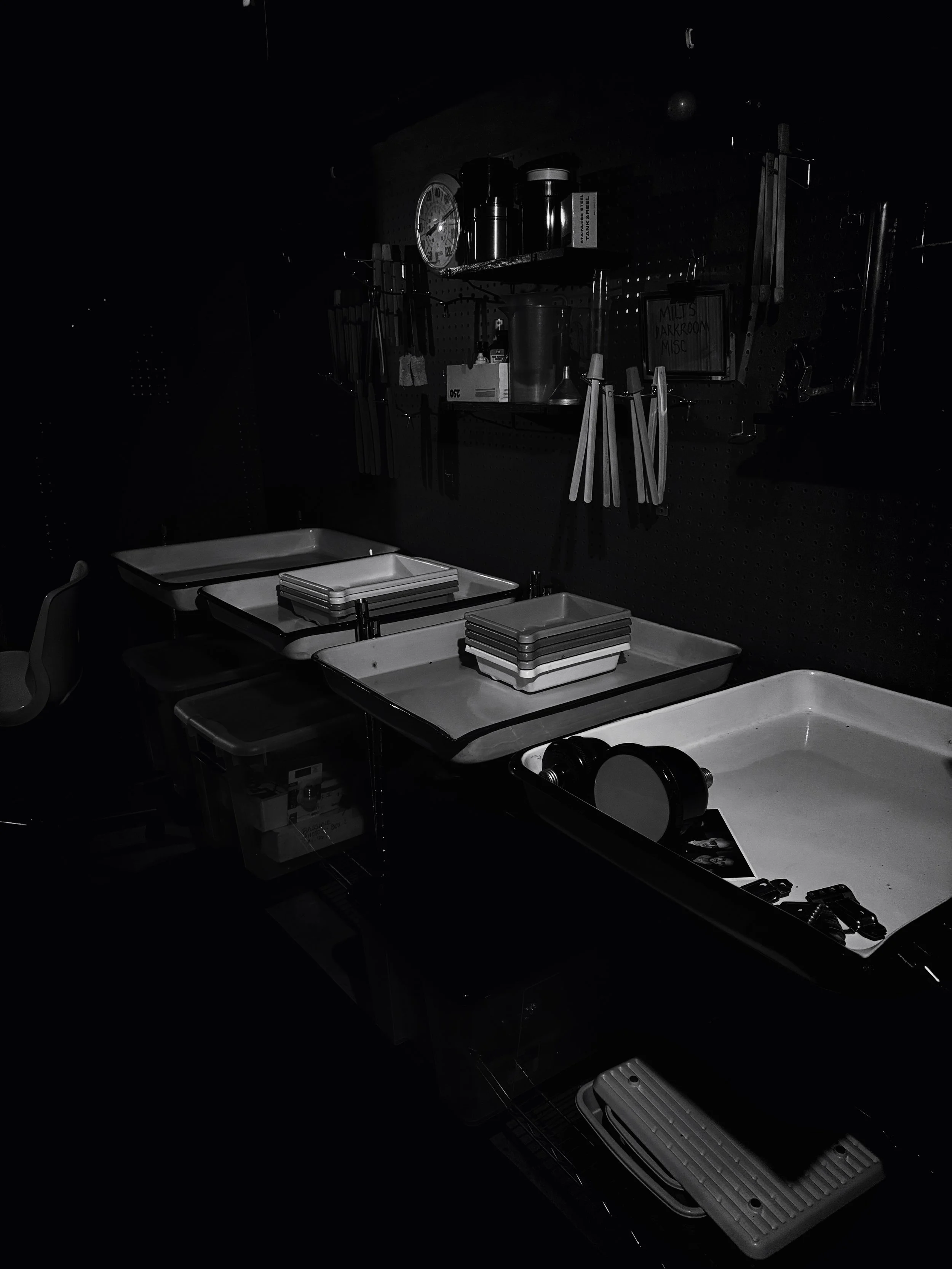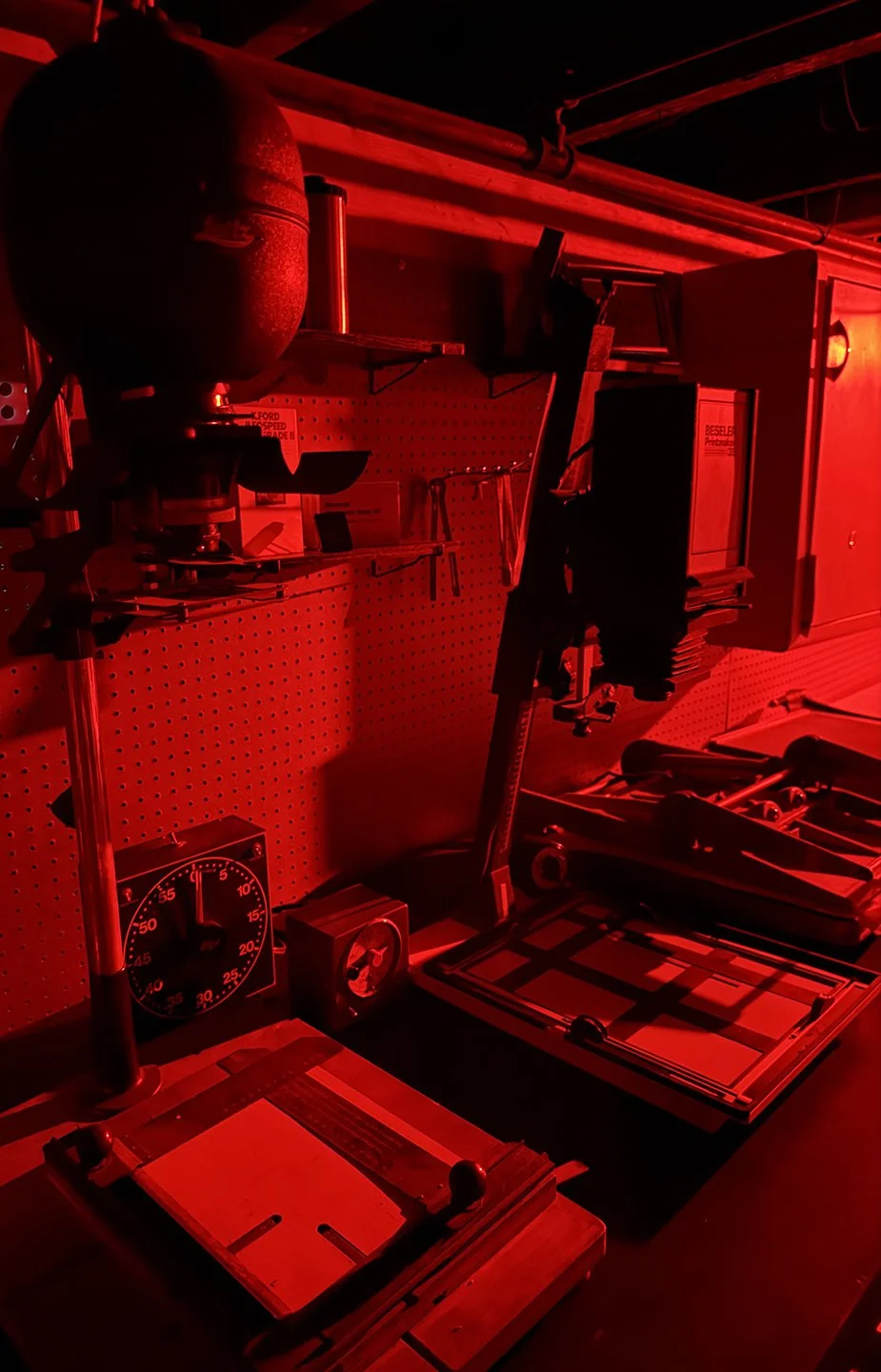
Inside the mlton Darkroom.
A working analog darkroom built around enlargers and photographic equipment with a history of use by established photographers and studios.
-
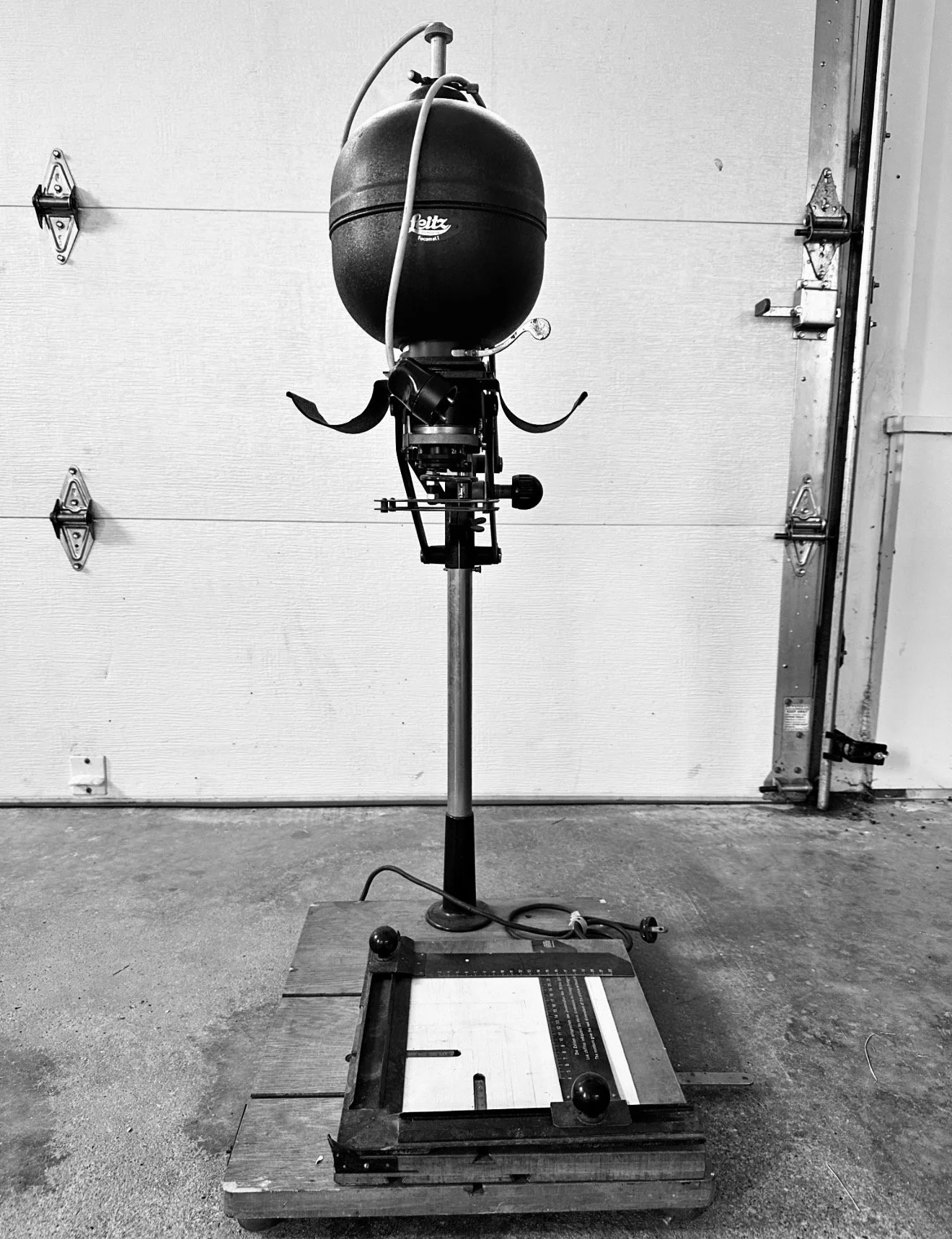
Leica Focomat 1c
The centerpiece of the darkroom is a Leica Focomat 1C enlarger, a precision 35mm enlarger long valued for its optics, build quality, and automatic focusing system.
This particular enlarger carries an important photographic lineage. It was used in the New York darkroom of David G. Berger and Holly Maxson, co-directors of the Milton J. Hinton Photographic Collection, in their decades-long work preserving and printing the archive of Milt Hinton. Hinton was not only one of the most respected jazz bassists of the twentieth century, but also a prolific photographer who documented the musicians and culture around him for more than six decades. His archive contains roughly 60,000 black-and-white photographs, including images of Louis Armstrong, Count Basie, Thelonious Monk, Billie Holiday, and many others.
Among Hinton’s best-known photographs are those made during Billie Holiday’s final recording session in 1959, as well as intimate images of fellow musicians made on the road, backstage, in recording studios, and at home. His gelatin silver photographs produced with this enlarger are now held in major museum collections, including the Brooklyn Museum and The Metropolitan Museum of Art.
Using this enlarger, Berger and Maxson produced prints while preserving and interpreting Hinton’s vast archive, work that contributed to books including Bass Line, OverTime, and Playing the Changes. Today, reassembled at MLTON Studios, the Focomat continues as both a historic artifact and a working enlarger—linking Hinton’s photographic legacy to a new generation of black-and-white printing.
-
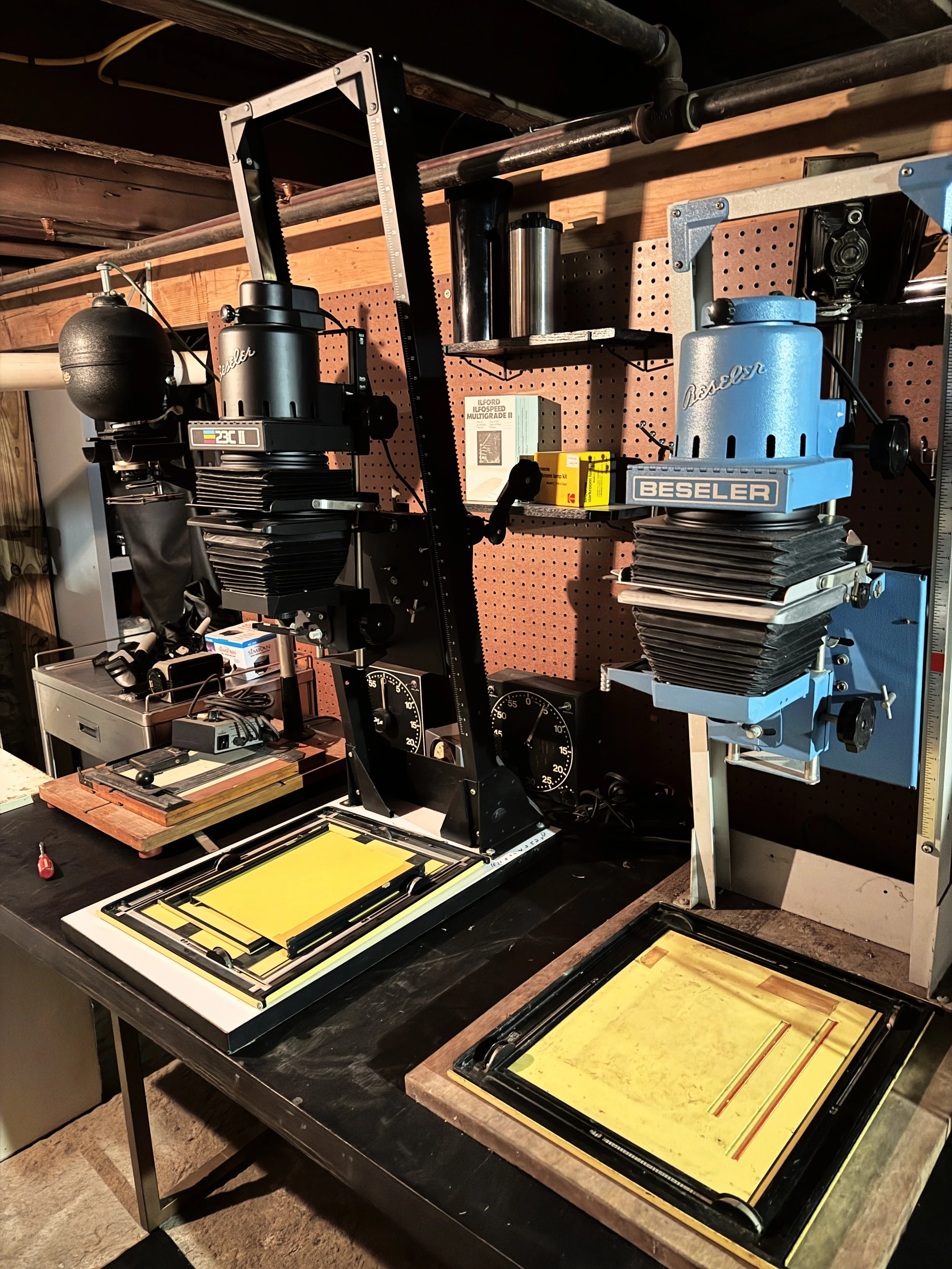
Besseler 23c
The Beseler 23C became one of the defining enlargers of the American darkroom. Introduced in the late 1950s, it gave photographers a durable, precise, and highly adaptable tool for making black-and-white prints at a time when the home and studio darkroom were central to photographic practice.
Built to handle negatives up to 6×9 cm, the 23C was unusually versatile. Its sturdy counterbalanced head made height adjustments smooth and controlled, while the condenser system was known for producing sharp, contrast-rich prints. The rotating baseboard also allowed for horizontal projection, giving photographers the ability to make larger prints beyond the physical limits of the easel.
Its combination of reliability and flexibility made the 23C a fixture in professional studios, schools, community darkrooms, and home setups for decades. The design proved so successful that it became the foundation for the later 23CII and subsequent generations of the Beseler 23C line.
More than just a piece of darkroom equipment, the 23C represents an era when photographers had direct physical control over every stage of the print—exposure, contrast, burning, dodging, and scale—all shaped by hand under the enlarger.
This enlarger came to MLTON Studios through photographer John Keller, whose work moved through serious international photography circles for many years, adding another layer of photographic history to a machine already deeply associated with traditional black-and-white printing.
-
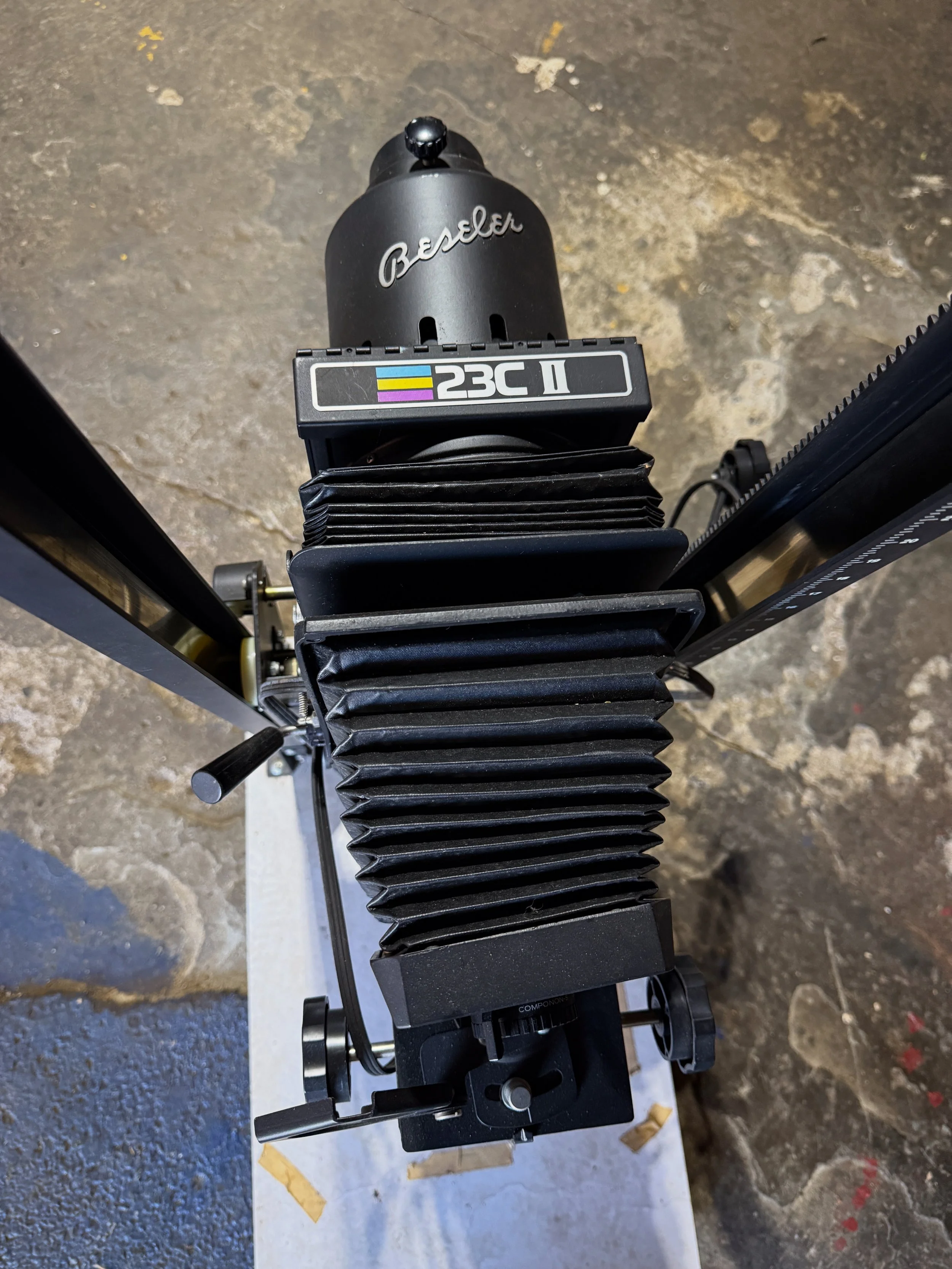
Besseler 23C II
The Beseler 23CII took everything photographers valued about the original 23C and refined it into one of the most dependable enlargers of its generation. Built with the same heavy-duty construction and smooth counterbalanced head, it was designed to handle constant use in professional studios, school darkrooms, and community labs.
Capable of printing negatives from 35mm through 6×9 medium format, the 23CII offered the kind of flexibility that made it useful for almost any black-and-white workflow. Its condenser system became especially well known for producing crisp, contrast-rich prints with strong tonal separation and excellent detail.
That combination of durability, precision, and versatility helped make the 23CII a standard fixture in darkrooms across the country. It was the kind of enlarger photographers could rely on for decades, whether making contact prints, small work prints, or large exhibition photographs.
Beseler systems were used by generations of serious photographers, and the 23CII remains closely associated with the traditional craft of hand-printing—where exposure, contrast, dodging, burning, and final image character were all shaped under the enlarger.
This enlarger came to MLTON Studios through photographer John Keller, whose work circulated through serious international photography circles for many years, adding its own layer of photographic history to a machine already deeply rooted in darkroom tradition.
-
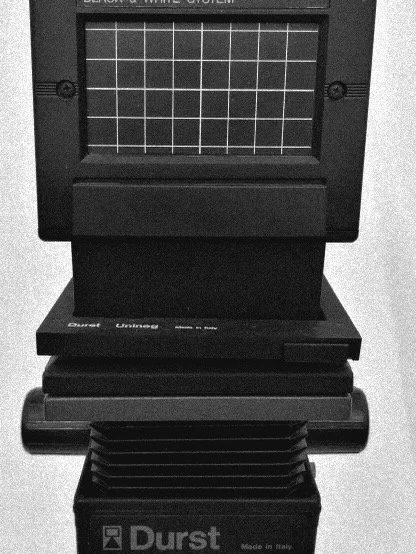
Durst M670 BW
The Durst M670 is a highly versatile multi-format enlarger, designed to handle everything from 35mm through 6×7 medium format. Built with the precision associated with Durst equipment, its rigid column, rack-and-pinion height system, and modular design made it equally suited to black-and-white, color, and variable-contrast printing.
Its flexibility was one of its greatest strengths. Interchangeable heads and conversion components allowed photographers to move between different printing processes while maintaining precise alignment and repeatable enlargements—qualities that made the M670 especially valuable in serious working darkrooms.
This particular enlarger carries its own photographic lineage through Rudolf van Dommele, a Dutch-born photographer whose career began with formal photographic training in The Hague before taking him to Paris, where he worked as a darkroom printmaker for the influential photographer and filmmaker William Klein. That foundation in traditional printing later expanded into a broader photographic career spanning fashion, editorial, music, documentary, and specialist commercial work.
Van Dommele’s path—from precision darkroom printing to international image-making—makes this enlarger especially fitting for MLTON Studios: a working tool with a direct connection to a photographer whose career bridged craft, commerce, and fine photographic practice.
-
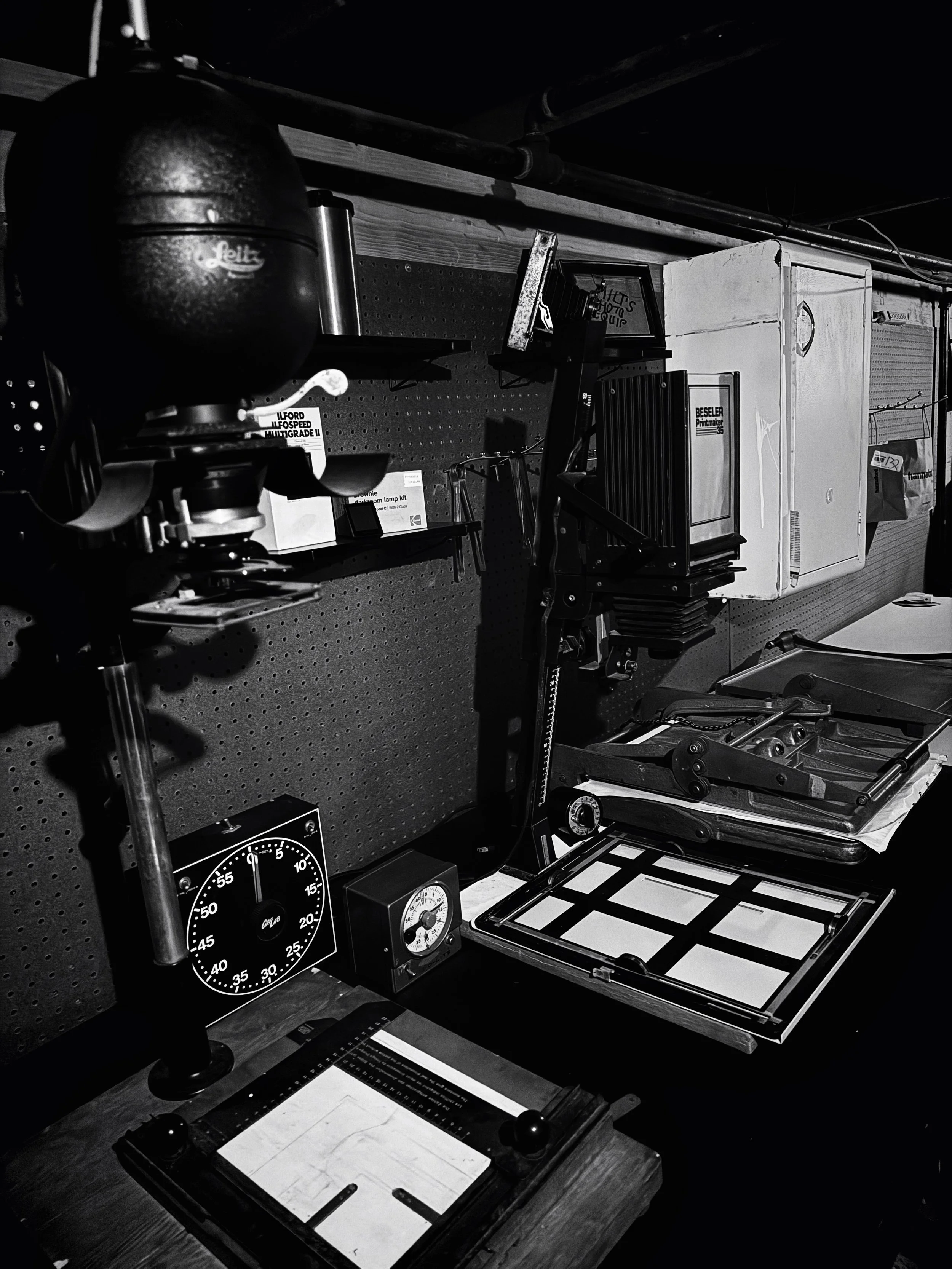
Besseler Printmaker
The darkroom is also equipped with a Besseler Printmaker 35 enlarger, a classic in Besseler’s long line of dependable enlargers.
Designed for 35mm negatives, it is known for its straightforward operation, solid alignment, and versatility in producing sharp, consistent prints. While more compact than the Leica Focomat, the Printmaker 35 excels as a reliable secondary enlarger — ideal for test strips, work prints, or shared use when multiple printers are working in the darkroom.
It’s also a perfect tool for making contact sheets, allowing photographers to review an entire roll of negatives without interrupting the flow of fine printing on the Leica. Having a backup enlarger ensures uninterrupted workflow, provides flexibility for experimentation, and allows the studio to support more than one project at a time.
-
EXTRAS
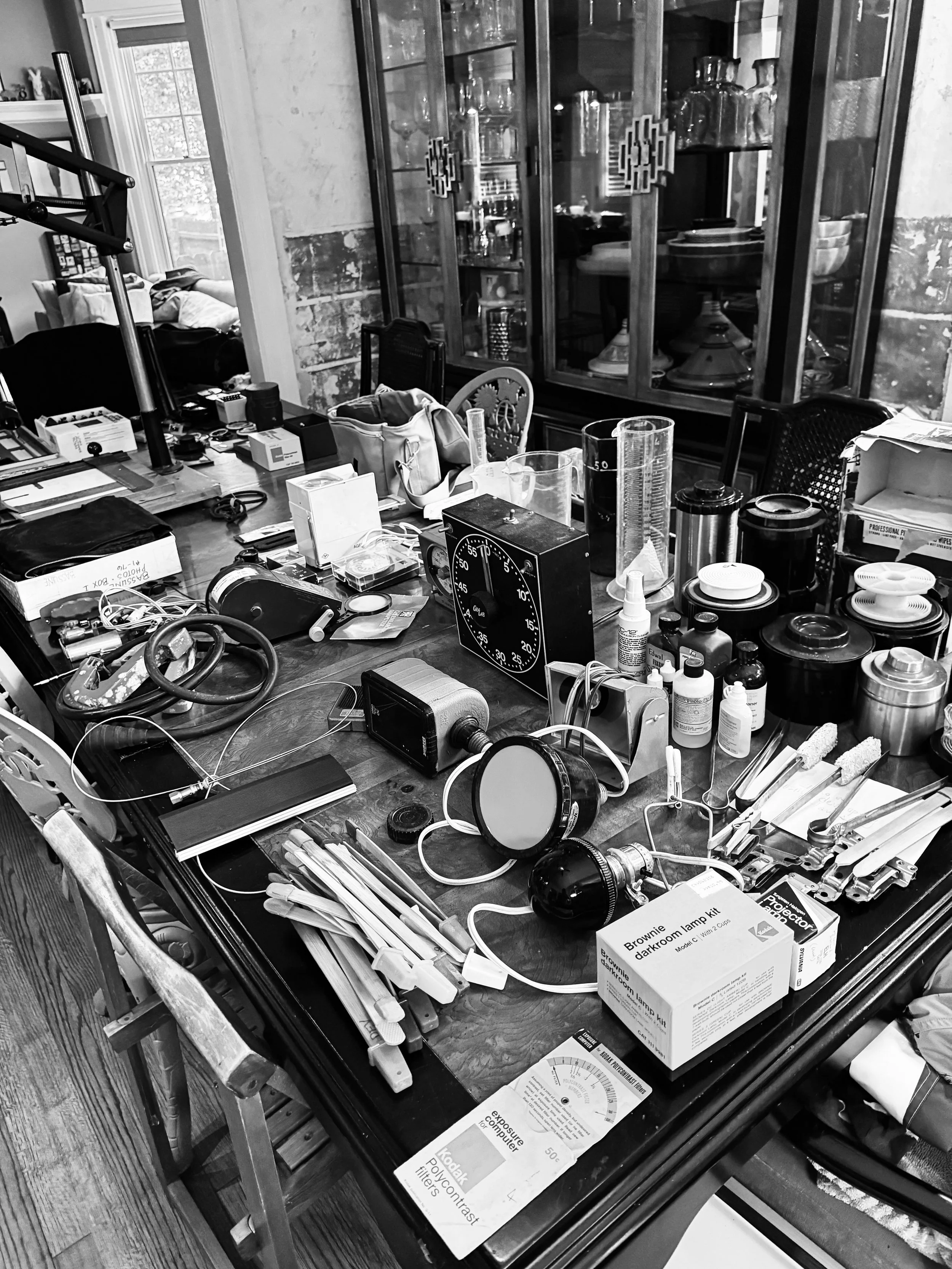
This photo shows the initial unpacking of boxes from the original Milton Darkroom — the starting point for the extensive equipment collection now housed at Milt Studios.
Dry Mounting Press – For producing archival-quality, presentation-ready prints.
Large-Format Enamel Processing Trays – Oversized trays capable of handling big prints with consistency.
Original Poly Contrast Filters – Part of the historic Milt darkroom, used to fine-tune tonal range and contrast.
Enlarging Computers & Timers – Precision tools for accurate exposure control and repeatable results.
Extensive Darkroom Accessories – The original tools, finishing gear, and supporting equipment that once formed the backbone of the Milton darkroom, now available for use at MLTON Studios.